
Table Of Contents
- Introduction
- Understanding the Challenges of Hybrid Meetings
- Technique 1: Establish Clear Pre-Meeting Protocols
- Technique 2: Implement Technology Equity
- Technique 3: Designate a Remote Participant Advocate
- Technique 4: Create Intentional Engagement Opportunities
- Technique 5: Utilize Collaborative Digital Workspaces
- Technique 6: Apply the ‘Remote-First’ Mindset
- Technique 7: Leverage Emergenetics Profiling for Inclusive Participation
- Technique 8: Establish Balanced Communication Protocols
- Technique 9: Implement Structured Facilitation Techniques
- Technique 10: Practice Continuous Improvement Through Feedback
- Conclusion
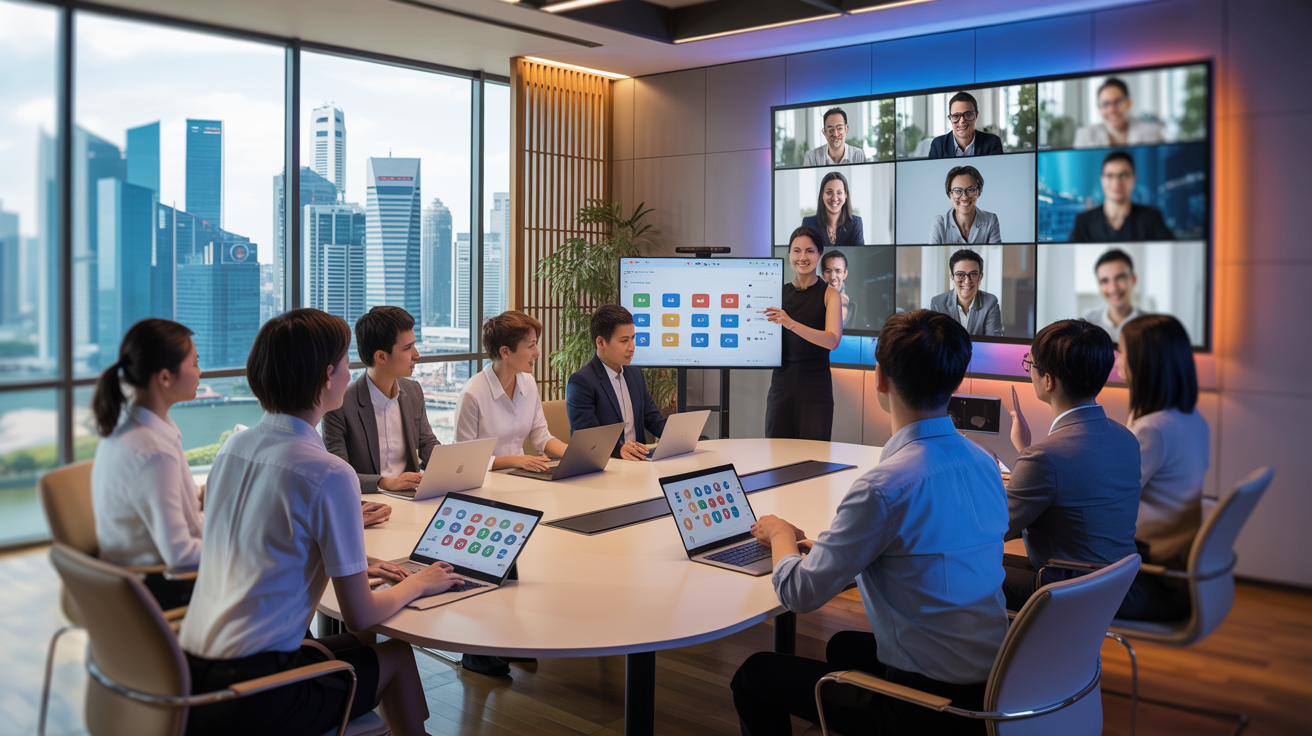
As workplaces evolve into hybrid environments, meeting facilitators face the unique challenge of creating experiences where both in-person and remote participants feel equally valued, heard, and engaged. At Trost Learning, we’ve guided organizations across Asia Pacific in mastering this critical skill since 2015, developing techniques that transform potentially disconnected hybrid meetings into powerful collaboration opportunities.
Hybrid meetings, when facilitated properly, can actually enhance organizational communication rather than hinder it. The key lies in intentional design that acknowledges the inherent imbalances between in-room and remote experiences, then proactively addresses them through structured facilitation techniques.
In this comprehensive guide, we’ll share ten proven techniques that facilitate truly equitable hybrid meetings—where location becomes irrelevant to participation quality. These approaches draw from our experience serving over 200 clients and 25,000 participants across multiple countries, combining learning design expertise with practical implementation strategies that any organization can adopt.
Understanding the Challenges of Hybrid Meetings
Before diving into solutions, it’s essential to understand the fundamental challenges that make hybrid meetings particularly difficult to facilitate effectively. Unlike fully in-person or fully remote meetings, hybrid settings create inherent power imbalances:
In-room participants benefit from full access to non-verbal cues, side conversations, and physical materials. They experience the energy of direct human interaction and can easily contribute through natural conversation flow. Meanwhile, remote participants often struggle with limited visibility, audio difficulties, and the challenge of interjecting into conversations happening in the room. These disparities typically result in remote participants becoming passive observers rather than active contributors.
Research shows this participation gap isn’t merely a perception problem—in typical hybrid meetings, remote participants speak 25% less than in-room counterparts. Over time, this participation inequality leads to decreased engagement, poorer decision quality, and ultimately, meeting fatigue for remote team members.
The techniques that follow address these challenges directly, creating meeting environments where everyone has equal opportunity to contribute, regardless of their physical location.
Technique 1: Establish Clear Pre-Meeting Protocols
Equal participation begins before the meeting starts. Creating standardized pre-meeting protocols ensures everyone arrives prepared to contribute, regardless of location.
Distribute Materials in Advance
Send all presentations, documents, and discussion points at least 24 hours before the meeting. This gives remote participants time to review materials on their own screens and prepare questions or contributions, rather than struggling to see shared content during the meeting.
Clarify Participation Expectations
Include specific guidance on how participants should prepare to contribute. For example, request that everyone come with at least one question or insight related to the agenda. This creates equal responsibility for participation across all attendees.
Technical Setup Guidance
Provide clear instructions for both remote and in-room participants about technology setup. This includes camera positioning for in-room participants that ensures remote attendees can see everyone, audio testing protocols, and backup plans if technical issues arise.
When consistently applied, these pre-meeting protocols create a foundation where everyone starts from an equal position, regardless of their physical location during the meeting.
Technique 2: Implement Technology Equity
The technology setup in hybrid meetings can either exacerbate or minimize participation gaps. Achieving technology equity means ensuring that the meeting technology serves all participants equally well.
Individual Digital Devices
Have all in-room participants log into the meeting platform on their individual devices, even while sitting in the same physical space. This creates digital equity by ensuring everyone accesses shared documents, chat functions, and digital participation tools in the same way.
Multiple Camera Angles
Deploy multiple cameras in the meeting room—one showing the whole room and others focused on presenters or whiteboard areas. This provides remote participants with the same visual information available to those in the room.
Quality Audio Solutions
Invest in omnidirectional microphones that capture voices equally well from all parts of the meeting room. Poor audio quality is consistently cited as the most significant barrier to remote participation, yet it’s often the most overlooked technical element.
Technology equity isn’t about having the most expensive equipment—it’s about thoughtfully configuring your technology setup to create comparable experiences regardless of location. Even organizations with limited budgets can achieve significant improvements through careful placement of existing technology.
Technique 3: Designate a Remote Participant Advocate
One of the most effective techniques for ensuring equal participation is assigning someone the specific role of advocating for remote participants throughout the meeting.
Responsibilities of the Remote Advocate
This person actively monitors the virtual room, watching for raised hands, chat messages, or other signals that remote participants want to contribute. They interrupt in-room conversations when appropriate to create space for remote voices. Additionally, they verbalize any visual information happening in the room that remote participants might miss.
Rotating the Role
For regular meetings, rotate this responsibility among team members. This builds empathy for the remote experience across the entire team and prevents the role from becoming burdensome for any one person.
The remote advocate role has proven particularly effective in organizations with strong in-person cultures transitioning to hybrid work. It creates structural accountability for inclusion rather than leaving it to chance or good intentions.
Technique 4: Create Intentional Engagement Opportunities
Spontaneous participation typically favors in-room participants. Counteract this by designing structured engagement opportunities throughout your meetings.
Round-Robin Input
At key decision points, systematically gather input from every participant using a consistent order that alternates between remote and in-person attendees. Begin with remote participants to establish their voices early in discussions.
Digital-First Ideation
When brainstorming or collecting ideas, use digital collaboration tools as the primary capture method, rather than physical whiteboards or flip charts that remote participants can’t easily contribute to. Tools like virtual whiteboards allow equal contribution regardless of location.
Silent Contribution Rounds
Incorporate periods where everyone contributes ideas in writing simultaneously through the digital platform before verbal discussion begins. This technique, drawn from our S.M.A.R.T Play Experiences, ensures all perspectives are captured before dominant voices can influence the conversation.
These structured engagement opportunities might initially feel formal compared to the organic flow of in-person meetings, but they quickly become natural practices that significantly improve participation equality.
Technique 5: Utilize Collaborative Digital Workspaces
Moving beyond basic video conferencing platforms to true collaborative workspaces creates environments where contribution becomes location-agnostic.
Persistent Collaboration Spaces
Utilize platforms that maintain the collaboration space before, during, and after meetings. This allows asynchronous contribution and prevents the meeting from being the only opportunity for input. Remote participants can add thoughts or questions in advance, ensuring their perspectives are included even if technical issues arise during the meeting.
Multi-Modal Contribution
Choose tools that support various contribution styles—text, images, drawings, reactions, and voting. This accommodates different thinking and communication preferences, creating more inclusive participation opportunities for all personality types.
Visual Collaboration
Implement visual collaboration tools that make thinking visible to all participants. When ideas are represented visually rather than just verbally, remote participants can more easily follow complex discussions and contribute meaningfully.
Our work with organizations across APAC has shown that the shift to collaborative digital workspaces not only improves hybrid meeting equity but often leads to better documentation, clearer decision trails, and more actionable outcomes for all types of meetings.
Technique 6: Apply the ‘Remote-First’ Mindset
Perhaps the most transformative approach to hybrid meetings is adopting a ‘remote-first’ mindset in meeting design and facilitation. This principle reframes the entire meeting experience around the needs of remote participants.
Meeting Structure Design
Design the meeting flow and activities as if everyone were remote, then adapt for in-person participants rather than the reverse. This means choosing interaction patterns that work well in digital environments and ensuring all information is accessible through digital channels.
Facilitation Language
Use inclusive language that doesn’t reinforce location-based differences. For example, refer to “everyone” rather than “people in the room and people online.” Consciously avoid phrases that create an in-group/out-group dynamic based on location.
Leadership Modeling
Have organizational leaders deliberately join meetings remotely sometimes, even when they could attend in person. This powerful symbol demonstrates that remote participation is valued equally and helps leaders experience the meeting from both perspectives.
The remote-first mindset represents a fundamental shift from seeing hybrid meetings as “normal meetings plus remote participants” to viewing them as a distinct meeting format with its own best practices and protocols. Organizations that make this mental shift consistently report more successful hybrid collaborations.
Technique 7: Leverage Emergenetics Profiling for Inclusive Participation
Understanding how different thinking preferences influence participation patterns is crucial for creating truly inclusive hybrid meetings. Emergenetics Profiling provides a framework for recognizing and accommodating diverse thinking and behavioral preferences.
Thinking Preference Awareness
Use insights from Emergenetics Profiling to understand how different thinking preferences manifest in hybrid settings. For example, analytical thinkers may need more processing time before contributing, while conceptual thinkers might generate ideas rapidly. In hybrid settings, these differences can be amplified by the technology interface.
Multi-Modal Facilitation
Design meeting activities that intentionally engage all four Emergenetics thinking preferences—Analytical, Structural, Social, and Conceptual. This might include time for data review (Analytical), clear process outlines (Structural), relationship-building activities (Social), and creative ideation (Conceptual).
Behavioral Attribution Training
Train facilitators to recognize when hybrid meeting formats might be creating barriers for certain thinking preferences. For instance, remote participants with a Social thinking preference might find it harder to build connections in hybrid settings and may need intentional opportunities for relationship development.
By applying Emergenetics principles to hybrid meeting facilitation, organizations can create environments where diverse thinking styles are valued and accommodated regardless of participant location. This leads to not just more equal participation, but richer, more innovative outcomes.
Technique 8: Establish Balanced Communication Protocols
Clear communication protocols help overcome the inherent power imbalances in hybrid meetings, creating structure that ensures all voices have space to contribute.
Speaking Indicators
Implement clear signals for when someone wishes to speak. This might be virtual hand raises for all participants (including those in the room), or physical cards for in-room participants that mirror the digital hand-raising function. The key is creating visibility for all participation intentions.
Interruption Management
Establish and enforce norms around interruptions. In hybrid settings, interruptions disproportionately disadvantage remote participants who lack the visual cues to time their contributions effectively. A simple protocol of completing current points before addressing raised hands creates more equitable participation opportunities.
Contribution Tracking
Use simple visual tracking of speaking time or contributions to bring awareness to participation patterns. This might be as sophisticated as analytics from meeting platforms or as simple as a facilitator keeping tallies. Making the pattern visible often naturally leads to more balanced participation.
These protocols might initially feel overly structured, but our experience with hundreds of organizations shows they quickly become natural meeting habits that significantly improve the quality of hybrid collaboration.
Technique 9: Implement Structured Facilitation Techniques
Specific facilitation techniques can transform hybrid meeting dynamics, creating spaces where equal participation becomes the default rather than requiring constant effort.
Breakout Group Design
When using breakout groups, create either fully virtual breakouts (where in-room participants join from their devices) or carefully balanced hybrid breakouts with clear facilitation roles assigned. Avoid having just one or two remote participants in otherwise in-person groups, as this typically marginalizes the remote experience.
Time Boxing
Implement strict time management for different agenda sections, ensuring the meeting doesn’t get dominated by in-room conversations that are easier to extend informally. When time boundaries are clear and enforced, facilitators can ensure balanced participation throughout.
Progressive Disclosure
Present information and questions in smaller, sequenced segments rather than all at once. This technique, drawn from our Corporate and Personal Development Programmes, creates multiple entry points for discussion and prevents early contributions from anchoring the entire conversation in one direction.
These facilitation techniques require intentional practice but yield significant improvements in hybrid meeting equality. Organizations that invest in developing these skills across their meeting leaders report substantial improvements in remote team engagement and collaboration quality.
Technique 10: Practice Continuous Improvement Through Feedback
The final technique focuses on creating feedback loops that allow your hybrid meeting practices to continuously evolve and improve.
Anonymous Equality Assessments
Regularly collect anonymous feedback specifically about participation equality in your hybrid meetings. Ask both remote and in-person participants to rate how equally they felt able to contribute and what barriers they experienced.
Location Rotation Analysis
For teams that have flexibility about who attends in person, track participation patterns as people rotate between remote and in-person attendance. This reveals whether certain individuals consistently participate less when remote, indicating potential systemic issues to address.
Facilitation Peer Reviews
Implement peer observation and feedback for meeting facilitators, specifically focused on how well they create equal participation opportunities. This creates a culture of continuous improvement in hybrid facilitation skills.
By treating hybrid meeting facilitation as a skill to be continuously refined rather than a problem to be solved once, organizations develop practices that evolve with their teams’ needs and technological capabilities.
Conclusion
Facilitating truly equitable hybrid meetings isn’t achieved through technology alone—it requires intentional design, skilled facilitation, and a commitment to creating inclusive experiences regardless of participant location. The ten techniques outlined in this guide provide a comprehensive framework for transforming hybrid meetings from potentially fragmented experiences into powerful collaboration opportunities.
As workplace flexibility continues to evolve, mastering these facilitation techniques becomes a critical organizational capability rather than just a nice-to-have skill. Organizations that excel at creating equal participation in hybrid settings gain significant advantages in talent attraction, employee engagement, and ultimately, innovation quality.
At Trost Learning, we’ve seen firsthand how these techniques transform team dynamics across our work with organizations throughout Asia Pacific. Through our Purpose-Driven, People-Centred approach to learning design, we help teams develop the specific skills needed to thrive in hybrid environments.
The future of work is neither fully remote nor fully in-person—it exists in the thoughtfully designed intersection between these modalities. By implementing these facilitation techniques, you create meeting experiences where ideas flow freely regardless of where participants are physically located, unlocking the full potential of your distributed teams.
Transform Your Team’s Hybrid Meeting Experience
Ready to elevate your organization’s hybrid collaboration capabilities? Trost Learning offers specialized workshops and consulting services to help your teams master the art of inclusive hybrid facilitation.