
Table Of Contents
- Introduction
- Unique Challenges of Large-Group Team Building
- Strategic Planning & Logistical Considerations
- Selecting Appropriate Games for Large Groups
- Measuring ROI in Large-Group Team Building
- Case Studies: Successful Large-Group Implementations
- Conclusion
Game-Based Team-Building for Large Groups (50+ Pax): Expert Logistics & ROI Guide
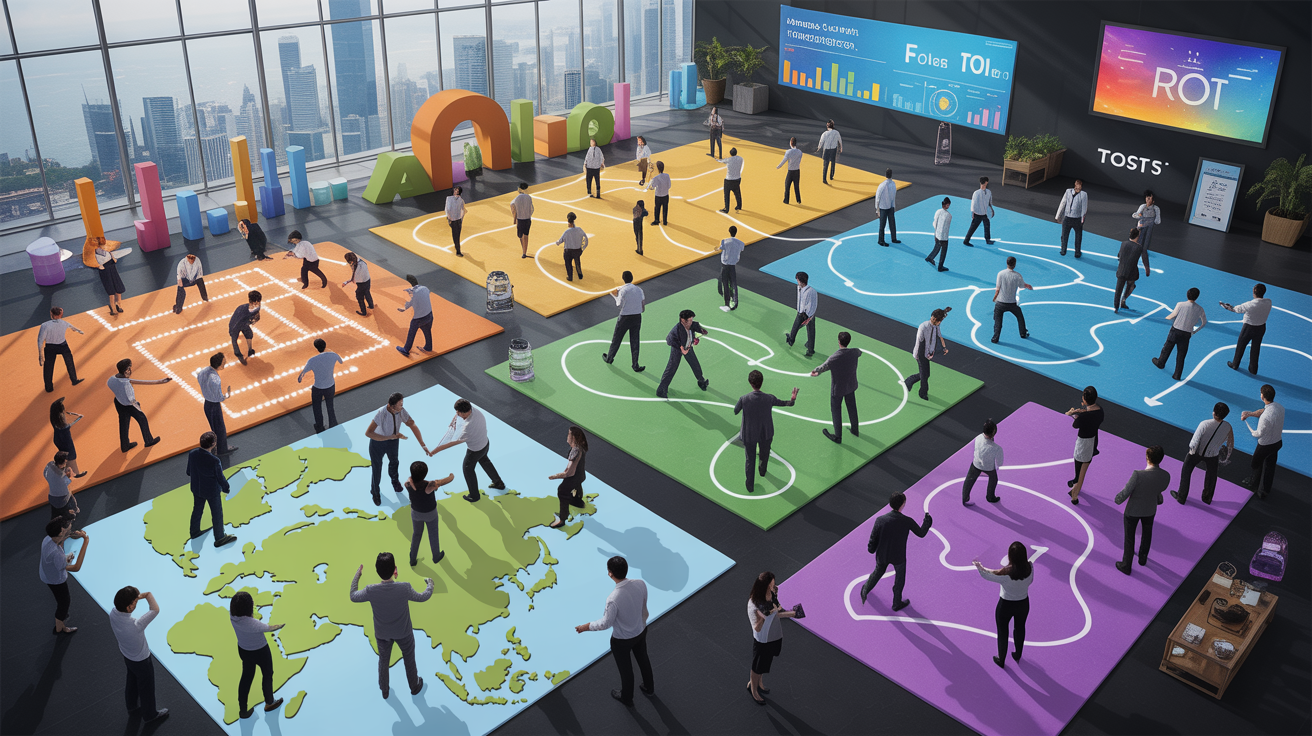
Orchestrating meaningful team-building experiences for groups of 50 or more participants presents a unique set of challenges and opportunities. Unlike smaller team activities where intimate connections form naturally, large-group dynamics require careful design thinking to ensure every participant remains engaged and no one gets lost in the crowd. At Trost Learning, we’ve guided organizations across Asia Pacific in designing and implementing large-scale team experiences that deliver measurable results beyond just temporary excitement.
When executed with expertise, game-based team building for large groups can transform organizational culture, break down silos between departments, and create powerful shared experiences that resonate long after the event concludes. However, the logistical complexities and investment required demand thoughtful planning and clear measurement strategies to justify the expenditure.
This comprehensive guide explores the unique considerations for planning large-group team-building activities, selecting appropriate games that scale effectively, managing the complex logistics, and implementing measurement frameworks that demonstrate tangible return on investment. Whether you’re an HR director, event planner, or team leader tasked with uniting a large workforce, this resource will equip you with the insights needed to create transformative experiences for groups of 50, 100, or even several hundred participants.
Game-Based Team-Building for Large Groups
Master the complexities of organizing effective team-building for groups of 50+ participants
Unique Challenges
- Coordination complexity increases exponentially
- Ensuring participation equity across diverse groups
- Finding activities that resonate with all departments
- Complex data collection and outcome measurement
Logistical Considerations
- Venue acoustics and multiple activity zones
- Buffer time: add 25-30% more than estimated
- Facilitator ratio: 1 lead + 1 support per 25 participants
- Pre-packaged materials and digital alternatives
Highly Effective Game Structures for Large Groups
Simultaneous Involvement
Activities where all participants can be actively engaged at once (collaborative art, rhythm-based activities)
Modular Structures
Tournament formats, puzzle piece designs, and rotation systems that break large groups into manageable teams
Technology-Enhanced
Mobile team challenges, real-time response systems, and virtual integration options
Measuring ROI Framework
1Collect Baseline Data
Conduct pre-event assessments on collaboration metrics and organizational alignment
2Capture In-Event Data
Use digital tools to gather real-time feedback during the event to capture learning moments
3Post-Event Evaluation
Deploy comprehensive evaluation within 48 hours to measure immediate impact
4Follow-Up Assessment
Conduct 30/60/90 day follow-ups to measure sustained behavior change and business impact
ROI (%) = [(Benefits – Costs) / Costs] × 100
Key Success Metrics from Case Studies
Financial Services Organization
47% increase in cross-legacy collaboration intentions
23% faster completion of integration projects
Technology Company
27 viable product/process improvements generated
8.5× ROI on implemented innovations
Trost Learning: Award-winning learning and engagement design consultancy
Unique Challenges of Large-Group Team Building
Team building for large groups fundamentally differs from smaller-scale activities in several critical ways. Understanding these differences is essential for designing experiences that deliver meaningful outcomes rather than logistical headaches.
First, the coordination complexity increases exponentially with group size. While a team of 10-15 people might easily gather in a circle for instructions or feedback, groups of 50+ require sound systems, multiple facilitators, and carefully orchestrated movement patterns. This complexity extends to every aspect of the experience—from bathroom breaks to refreshment logistics.
Second, participation equity becomes increasingly difficult to ensure. In smaller groups, each person typically has opportunities to contribute, lead, and be heard. In large groups, more reserved individuals can easily fade into the background, while dominant personalities may monopolize attention. Without thoughtful design, large-group activities risk reinforcing rather than bridging social divides.
Third, relevance and transfer challenges intensify. The larger and more diverse the group, the more difficult it becomes to select activities that resonate with everyone’s work context. While sales teams might embrace high-energy competitive games, technical teams might prefer more strategic collaborative challenges. Finding the sweet spot that engages diverse functional areas requires expertise in learning design.
Finally, data collection and outcome measurement grow more complex with scale. Gathering meaningful feedback from 50+ participants requires efficient systems beyond simple paper surveys, especially when trying to measure both immediate satisfaction and longer-term impact on workplace behaviors.
Strategic Planning & Logistical Considerations
The success of large-group team building hinges on meticulous advance planning and logistics management. Here’s how to approach each critical element:
Venue Selection & Setup
When hosting 50+ participants, venue selection becomes a critical success factor. Beyond simply finding a space large enough to accommodate everyone physically, consider these essential factors:
Acoustics: Large spaces often create echo and sound bleed issues that make communication difficult. Test the acoustics before committing, and ensure your venue has adequate audio system capabilities or can accommodate rented equipment.
Multiple activity zones: The best large-group team experiences often incorporate “stations” or zones where different activities occur simultaneously. Look for venues with flexible layouts that allow for both whole-group gatherings and breakout activities.
Traffic flow: Visualize how 50+ people will move through the space during transitions between activities. Are hallways, doorways, and paths wide enough to prevent bottlenecks? Is there clear space for queuing if necessary?
Restroom capacity: Often overlooked but critically important—ensure the venue has sufficient facilities to handle peak usage during breaks without creating long waiting lines that eat into activity time.
Temperature control: Large groups generate significant body heat, especially during active games. Venues with inadequate climate control can quickly become uncomfortably warm, undermining the experience.
Time Management
Time expands with group size. Activities that take 30 minutes with 20 participants might require 45-60 minutes with 50+ due to the additional time needed for instructions, transitions, and ensuring everyone completes each phase. When building your schedule:
Buffer generously: Add 25-30% more time to each activity segment than you think necessary, especially for transitions between activities.
Stagger breaks: Consider releasing participants for breaks in waves to prevent overwhelming restroom facilities and refreshment stations.
Pre-set materials: Distributing materials to large groups consumes valuable time. Have all materials pre-positioned at tables or stations whenever possible.
Visual timekeeping: Use projected countdown timers visible to all participants during activities to keep energy high and activities moving forward.
Facilitator-to-Participant Ratios
Appropriate staffing makes or breaks large-group experiences. At Trost Learning, we’ve found these ratios effective for different team-building formats:
Single large-group format: For activities where all participants engage in the same experience simultaneously, maintain a ratio of 1 lead facilitator plus 1 support facilitator for every 25 participants. This ensures instructions are clear, questions are answered promptly, and facilitators can observe and intervene as needed.
Rotational station format: When using activity stations that teams rotate through, assign one dedicated facilitator per station plus floating facilitators to manage transitions (typically 1 floater per 50 participants).
Breakout team format: If your design incorporates breakout teams working on separate challenges, assign 1 facilitator for every 3-4 teams to provide guidance and keep teams on track.
Beyond professional facilitators, consider recruiting and briefing volunteers from within the organization to serve as team captains or station assistants, extending your facilitation reach.
Equipment & Materials Management
The logistics of providing materials for 50+ participants requires systems thinking. Consider these approaches:
Kit preparation: Pre-package materials into team kits that can be quickly distributed rather than handing out individual items.
Simplified materials: Where possible, design activities that require fewer physical materials without sacrificing engagement.
Digital alternatives: Consider replacing physical handouts with QR codes linking to digital resources, reducing distribution complexity.
Inventory management: Develop clear systems for tracking and collecting materials post-activity, especially for reusable items.
Selecting Appropriate Games for Large Groups
Not all team-building activities scale effectively. Games that create magical experiences for 15-20 participants can become logistical nightmares or provide minimal engagement when applied to groups of 50+. Here’s how to select activities that deliver impact at scale:
Highly Scalable Activities
The most effective large-group games share certain characteristics that enable them to maintain engagement regardless of participant numbers:
Simultaneous involvement: Activities where all participants can be actively engaged at once rather than taking turns maintain energy and prevent disengagement. Examples include:
• Collaborative Art Installations: Teams work on separate components that ultimately combine into a larger organizational mural or structure, creating both team focus and whole-group impact.
• Rhythm-Based Activities: Synchronized drumming or movement activities create powerful shared experiences where everyone contributes simultaneously to a collective outcome.
• Mass Problem-Solving Challenges: Specially designed puzzles or challenges where teams work in parallel before combining their solutions into a whole-group resolution.
Modular Game Structures
Modular activities use a “small within large” approach, breaking the larger group into manageable teams while maintaining a cohesive overall experience:
Tournament Structures: Teams compete in rounds, with winners advancing through brackets. This creates focused small-group engagement while maintaining whole-group interest in the tournament progression.
Puzzle Piece Design: Each team works on one element of a larger challenge, requiring cross-team coordination to achieve the final objective. This approach teaches both team excellence and inter-team collaboration.
Rotation Systems: Teams cycle through different activity stations, each offering a unique challenge related to an overall theme. This approach maintains small-group intimacy while providing variety and movement.
Technology-Enhanced Solutions
Digital platforms can significantly enhance large-group experiences by solving common logistical challenges:
Mobile Team Challenges: App-based team challenges allow participants to receive instructions, submit responses, and track progress digitally, eliminating the need for paper materials and reducing facilitator burden.
Real-Time Response Systems: Digital polling and response platforms enable instant collection of insights or answers from all participants, creating dynamic interaction even with very large groups.
Virtual Integration: For hybrid events or very large groups, strategic use of virtual elements can extend participation beyond physical constraints.
At Trost Play, we’ve developed S.M.A.R.T Play Experiences that strategically incorporate technology to enhance rather than replace human connection, ensuring digital elements serve the learning objectives rather than becoming mere novelties.
Measuring ROI in Large-Group Team Building
Justifying the significant investment required for large-group team building demands rigorous ROI measurement. Unlike smaller team activities, which might be justified on general team health grounds, large-scale events typically require demonstrable business impact.
Key Performance Metrics
Effective ROI measurement begins with selecting the right metrics aligned with your specific objectives. Common metrics include:
Immediate Experience Metrics:
• Participant satisfaction and engagement scores
• Quality and quantity of cross-departmental connections formed
• Reported clarity on organizational priorities or values
Intermediate Outcome Metrics:
• Improvements in cross-functional collaboration frequency
• Reduction in silo mentality (measured through surveys)
• Increased knowledge sharing across departments
• Enhanced understanding of other functions’ challenges and priorities
Business Impact Metrics:
• Reduction in project completion times requiring cross-functional work
• Employee retention improvements
• Innovation metrics (number of new ideas, implementation rates)
• Customer experience improvements from better internal collaboration
Data Collection Methods
Gathering meaningful data from large groups requires efficient, multi-phase approaches:
Pre-Event Baseline: Conduct brief surveys or assessments before the event to establish baseline measures on key metrics, particularly those related to cross-functional collaboration and organizational alignment.
In-Event Capture: Use digital tools to gather real-time feedback during the event, including immediate reflection questions after key activities. This data captures learning moments while they’re fresh.
Post-Event Evaluation: Deploy a comprehensive evaluation within 48 hours of the event to measure immediate impact and experience quality. Include questions about specific learnings and intended behavior changes.
Follow-Up Measurement: Conduct follow-up assessment 30, 60, or 90 days post-event to measure sustained behavior change and business impact. These follow-ups are critical for demonstrating lasting ROI.
ROI Analysis Framework
Translating data into ROI requires a structured analysis approach:
1. Direct Cost Calculation: Include all direct expenses (venue, facilitators, materials, technology, catering, transportation).
2. Opportunity Cost Assessment: Calculate the value of participant time based on average hourly costs and hours invested.
3. Benefit Quantification: Convert improvements in key metrics to financial terms where possible:
• Value productivity gains from improved collaboration
• Calculate cost savings from reduced turnover
• Estimate revenue impact from innovation or process improvements
4. ROI Calculation: Use the standard ROI formula:
ROI (%) = [(Benefits – Costs) / Costs] × 100
5. Intangible Benefit Documentation: Supplement quantitative ROI with qualitative benefits that resist direct financial valuation but deliver organizational value:
• Cultural alignment stories
• Leadership development observations
• Cross-functional relationship formation
Through Emergenetics Profiling and assessment, organizations can gain deeper insights into how team-building activities impact thinking preferences and behavioral attributes, providing an additional dimension to ROI measurement.
Case Studies: Successful Large-Group Implementations
Financial Services Organization: Uniting Through Change
A leading financial institution faced the challenge of integrating two distinct organizational cultures following a merger. With 200+ employees spanning different functional areas, they needed an intervention that would break down cultural barriers and create shared identity.
Trost Learning designed a full-day experience using modular team challenges structured around the organization’s new values. Participants worked in cross-functional teams of 8-10, with each team completing challenges at different stations throughout the day. The design incorporated:
• Pre-assigned diverse teams with members from both original organizations
• Activities specifically designed to highlight complementary strengths
• Technology-enabled reflection points where insights were captured in real-time
• A dramatic final activity that physically brought all 200+ participants together in a collaborative challenge
Results: Post-event surveys showed a 47% increase in cross-legacy collaboration intentions. Six-month follow-up data revealed that 68% of participants had formed lasting working relationships with colleagues from the other legacy organization. Project teams with members from both legacy organizations completed integration projects 23% faster than those with single-legacy composition.
Technology Company: Innovation Acceleration
A tech company with 150 employees across product development, engineering, marketing, and customer support teams needed to break down silos impeding their innovation pipeline. Their specific challenge was that ideas generated in one department rarely incorporated insights from other functional areas, leading to implementation problems.
We developed a custom game-based experience that:
• Utilized Emergenetics Profiling to create cognitively diverse teams
• Incorporated competitive “innovation sprints” where teams developed solutions to real company challenges
• Used digital platforms for teams to share and build upon each other’s ideas
• Culminated in a company-wide innovation showcase with leadership feedback
Results: The event generated 27 viable product or process improvement ideas, 12 of which were implemented within six months. Cross-functional ideation sessions increased by 64% in the quarter following the event, and the company reported a 31% reduction in implementation obstacles for new initiatives. The estimated first-year value of implemented innovations exceeded the program investment by 8.5×.
Conclusion
Game-based team building for large groups represents one of the most powerful interventions available to organizations seeking to transform culture, break down silos, and build collaborative capacity at scale. When thoughtfully designed and expertly facilitated, these experiences create shared reference points and connections that continue generating value long after the event concludes.
However, this power comes with corresponding complexity. The logistical demands, facilitation requirements, and design considerations for large-group experiences are substantially different from smaller team interventions. Success depends on meticulous planning, appropriate game selection, adequate facilitation resources, and robust measurement approaches.
By approaching large-group team building with the frameworks outlined in this guide—from venue selection to ROI analysis—organizations can create transformative experiences that justify their investment many times over. The key lies in treating these events not as isolated fun activities but as strategic interventions designed with clear business outcomes in mind.
For organizations serious about breaking down silos, building collaborative culture, or navigating significant change, well-designed large-group experiences aren’t merely nice-to-have events but essential strategic tools for organizational development and alignment.
At Trost Learning, our extensive experience designing and implementing team-building experiences for groups ranging from 50 to 500+ participants across Asia Pacific has confirmed repeatedly that scale need not come at the expense of impact. Through thoughtful design, appropriate technology integration, and expert facilitation, large-group experiences can deliver transformative outcomes and measurable returns.
Whether your organization needs to unite following restructuring, accelerate innovation through cross-functional collaboration, or simply strengthen the human connections that drive engagement and retention, large-scale game-based team building offers a powerful intervention. The key lies in approaching these events with strategic intent, design expertise, and measurement discipline.
The most successful organizations today recognize that collaboration at scale isn’t merely a cultural nicety but a business imperative. By investing in expertly designed large-group experiences, these organizations build the collaborative infrastructure needed to navigate complexity and change in today’s business environment.
Ready to explore how purpose-driven, game-based team building can transform collaboration and alignment for your large group? Contact Trost Learning today to discuss your objectives and discover how our award-winning approach to learning experience design can deliver measurable results for your organization.